AI Writes Code: Who Architects the Consequences? with Neal Ford // Software Architect & Author
Fitness functions, agentic guardrails, and why experienced architects matter more than ever in the AI era
Neil Ford · independent consultant and instructor (software architect, author, speaker)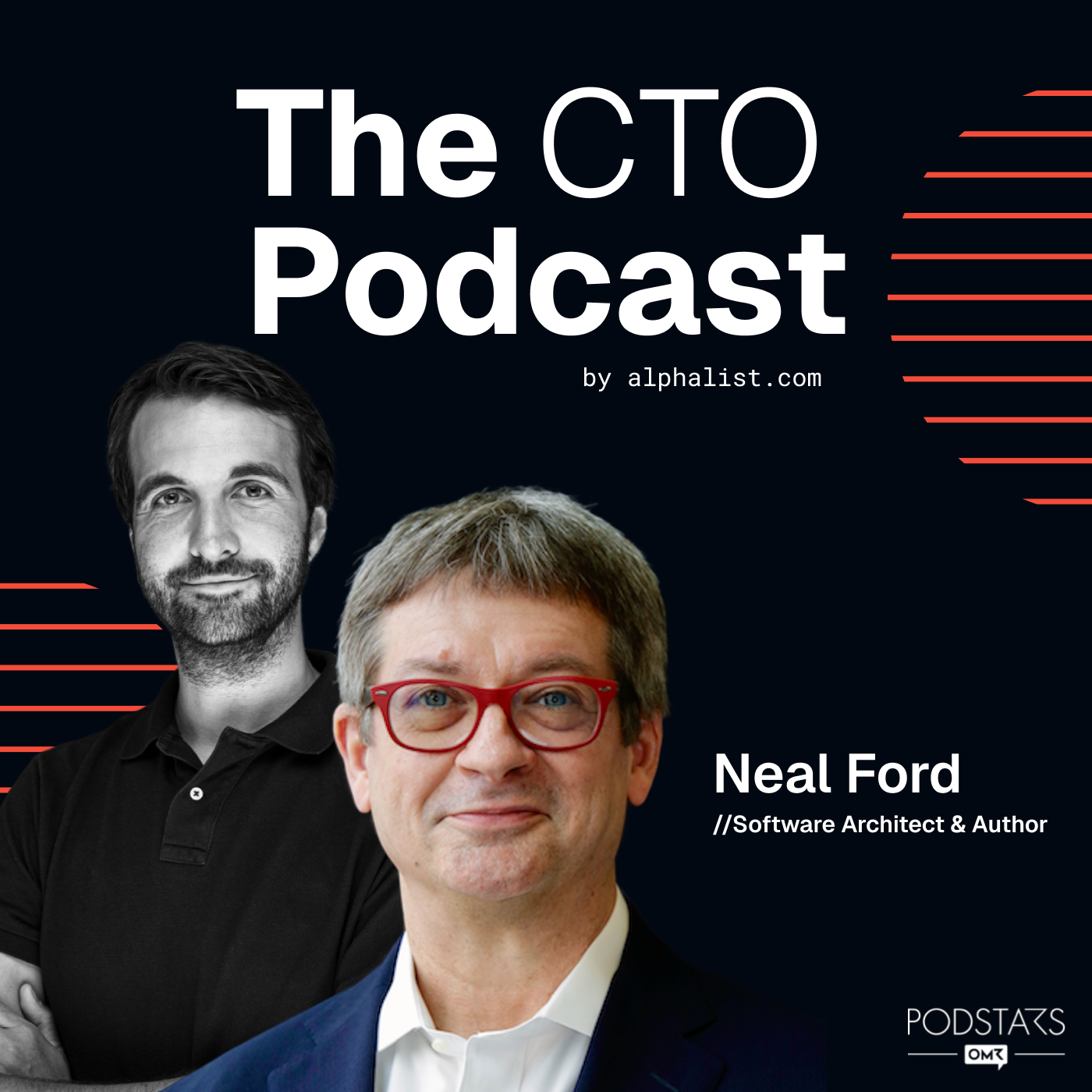
Neal Ford: software architect, author, speaker, and independent consultant (formerly 20+ years at ThoughtWorks), joins Tobias to explore what happens to software architecture when AI agents write the code.
We unpack the critical distinction between behavior and capabilities: why everyone focuses on what code does, but too few think about scalability, security, and responsiveness. Neal introduces architectural fitness functions as the essential guardrail for agentic systems, and explains why non-deterministic code generation demands deterministic tests.
Finally, we dig into legacy modernization, the Dreyfus scale applied to LLMs, ephemerality as the new architectural dimension, and why AI is a multiplier, not a replacement, for experienced engineers.
Show notes.
Neal Ford has spent decades thinking about how software systems hold together over time. In this episode, Tobias sits down with Neal to ask the question nobody is asking loudly enough: when AI agents write the code, who is responsible for the architecture?
We dive into:
-** Neal's origin story: **from journalism to mechanical engineering to computer science, and why writing made him a better architect
- **AI as an "advanced beginner": **why LLMs pattern-match instead of reason, and why that distinction matters deeply
- **Behavior vs. Capabilities: **the trap of building demos that scale to 60 users but collapse at 60,000
- **Architectural fitness functions: **how to use deterministic guardrails to constrain non-deterministic code generation
- Architecture Definition Language (ADL): using pseudocode to wire constraints into agents before they start building
- LLMs as interpolators: generating platform-specific fitness functions in Java, .NET, or Python from a single pseudocode spec
- **Legacy modernization: **why AI is best suited for re-engineering existing codebases, and what COBOL whispering looks like in practice
- Ephemerality as a new architectural dimension: the first question every CTO should ask before building anything
- **The future of developers and architects: **why experienced engineers are multiplied by AI — and 0 × 10 is still zero
- The AI hype cycle: RAD, no-code, and now agents — same pattern, same blowback, different speed
- Advice for CTOs: understand capabilities, govern what your agents build, and let life surprise you
Chapters: [00:00] Intro & welcome: Neal Ford — Software Architect & Author [00:28] Neal's journey: from journalism to computer science [02:10] Writing as a superpower in software architecture [03:45] AI as an "advanced beginner": the Dreyfus scale applied to LLMs [07:20] Behavior vs. Capabilities: the gap everyone is ignoring [11:05] Architectural fitness functions: guardrails for agentic systems [16:30] Architecture Definition Language (ADL) & LLMs as interpolators [21:00] Fitness function-driven architecture in practice [25:15] Legacy modernization: COBOL whispering and agentic re-engineering [30:40] Ephemerality: the new architectural dimension for CTOs [34:10] The future of developers, architects, and pull requests [38:50] The AI hype cycle: fads vs. trends [42:15] AI pricing models and the Silicon Valley playbook [44:30] Easter egg: choosing computer science over CIS — and why it paid off [46:00] Advice to his younger self: let life surprise you [47:10] Conclusion & final thoughts